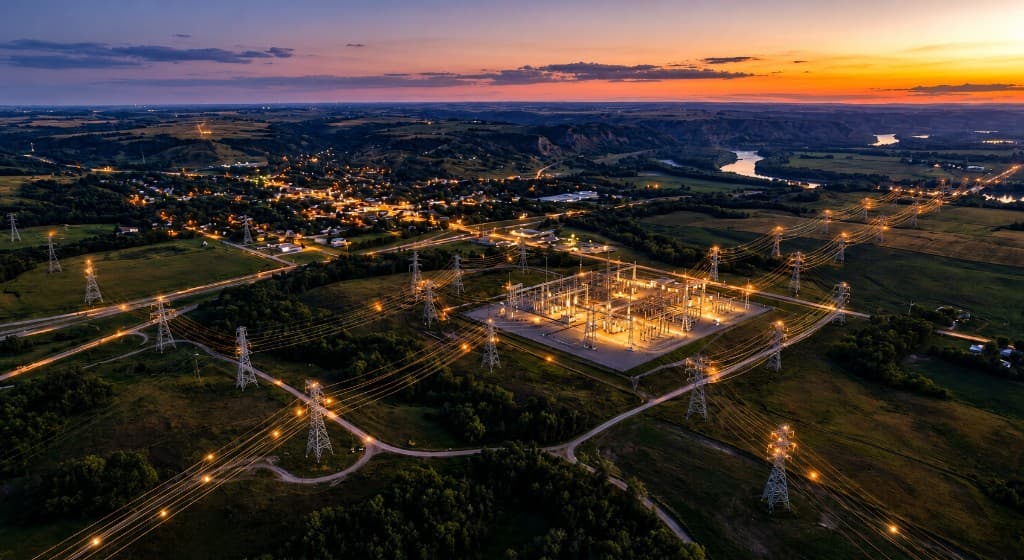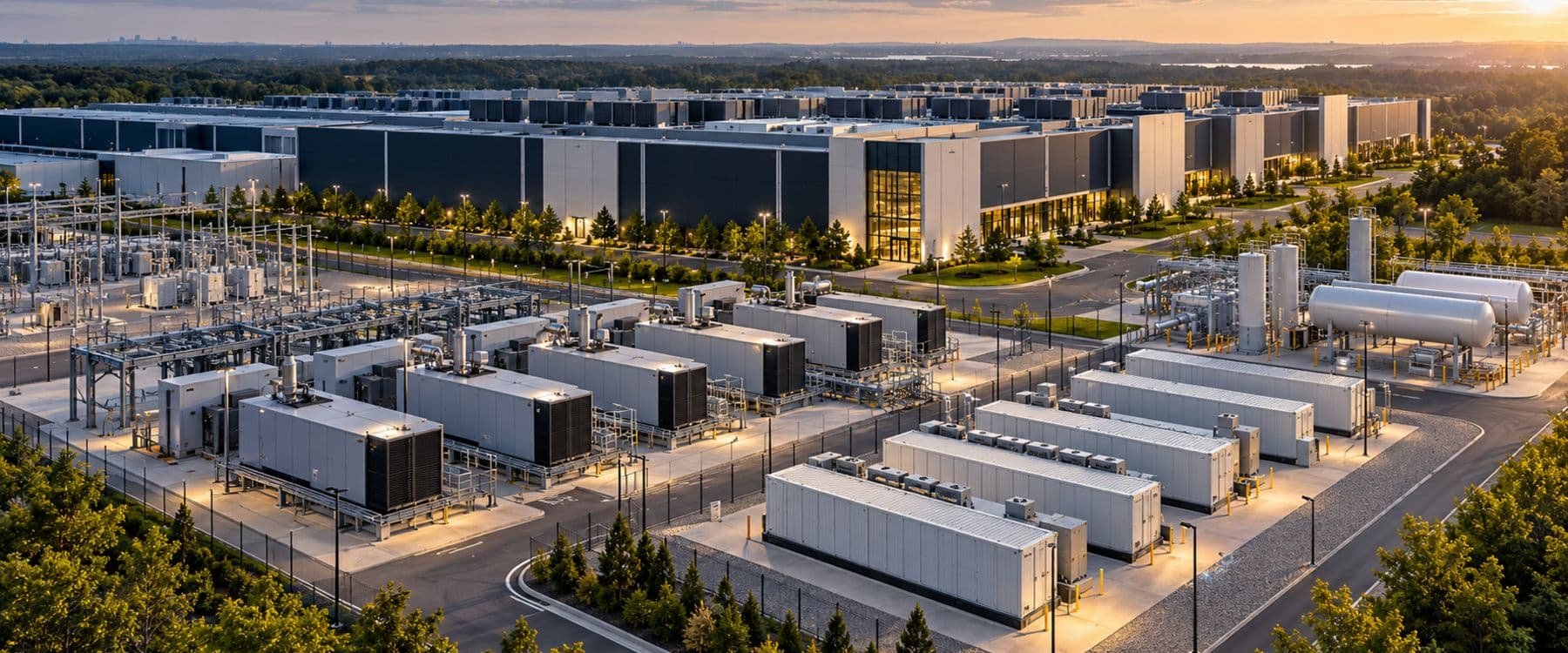
Scalable power systems
Devon structures each solution around the required operating mode rather than forcing one technology into every project.
Large critical facilities may combine centralized generation, circuit-level standby generators, energy storage, and a coordinated control platform.
- Load profiling, redundancy planning, and preliminary equipment sizing.
- OEM sourcing, production-slot coordination, and commercial structuring.
- Integration of generators, BESS, switchgear, transformers, controls, and utility interfaces.
- Coordination with the owner, engineer, EPC contractor, utility, and permitting authorities.
- Factory acceptance, logistics, commissioning, and service planning.
Technology selection guide
The final architecture depends on actual IT load, PUE, ambient temperature, elevation, fuel composition and pressure, emissions limits, required autonomy, interconnection rules, and permitted operating hours.
| Project requirement | Recommended platform | Reason |
|---|---|---|
| Independent 2–5 MW critical circuits | Diesel or HVO gensets | Granular N+1 redundancy and rapid emergency load acceptance |
| Continuous distributed generation below 2 MW per unit | Lean-burn natural-gas gensets | Modular prime power with pipeline fuel |
| Centralized 16–20 MW generation blocks | Devon GridForge 20 | Fewer machines for large campus-scale loads |
| Instantaneous ride-through and load transition | Devon GridReserve BESS | Fast response while generation starts or changes state |
| Complex multi-asset campus | Hybrid microgrid architecture | Coordinates generation, storage, and utility service |
Data center critical power: diesel and HVO
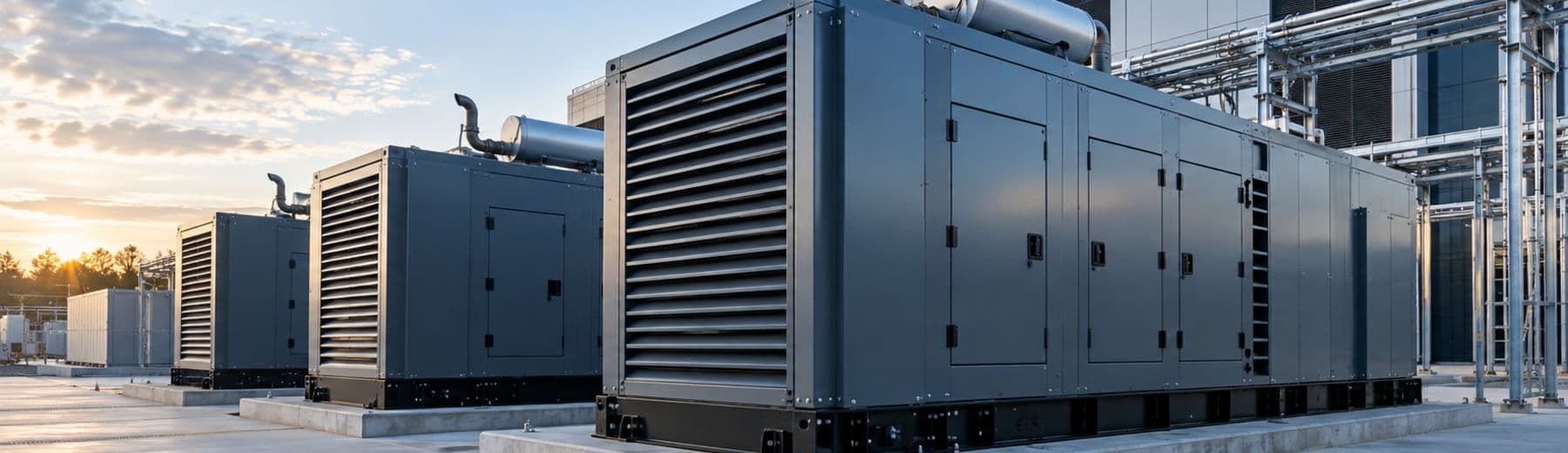
The critical-power portfolio is designed for facilities where load acceptance, redundancy, and maintainability determine system value.
Published platform ratings span approximately 1,900 to 6,250 kVA, allowing designers to reduce unit count while preserving an N+1 or distributed-redundant architecture.
| Capacity class | Published rating | Typical application | Key positioning |
|---|---|---|---|
| Critical power | From 1,900 kVA | Enterprise and colocation facilities | Scalable standby blocks for distributed redundancy |
| High density | 4,250–5,250 kVA | Large colocation and AI campuses | Higher capacity per generator with fewer units |
| Hyperscale | Up to 6,250 kVA / 5.0 MWe | High-density AI and hyperscale facilities | Highest published unit rating in the current platform family |
Critical power features
Guaranteed electrical output, fuel consumption, transient performance, sound level, exhaust aftertreatment, dimensions, weight, radiator configuration, autonomy, start sequence, applicable listings, and warranty are established for each site in the final technical schedule.
- ISO 8528-5 G3 performance-class positioning for demanding load transients.
- Published Uptime Institute pre-approved ratings for applicable data-center configurations.
- Diesel and HVO (EN 15940) compatibility on the data-center platform, subject to model confirmation.
- Configurable controls, remote monitoring, and integration with paralleling switchgear.
Lean-burn natural-gas generation
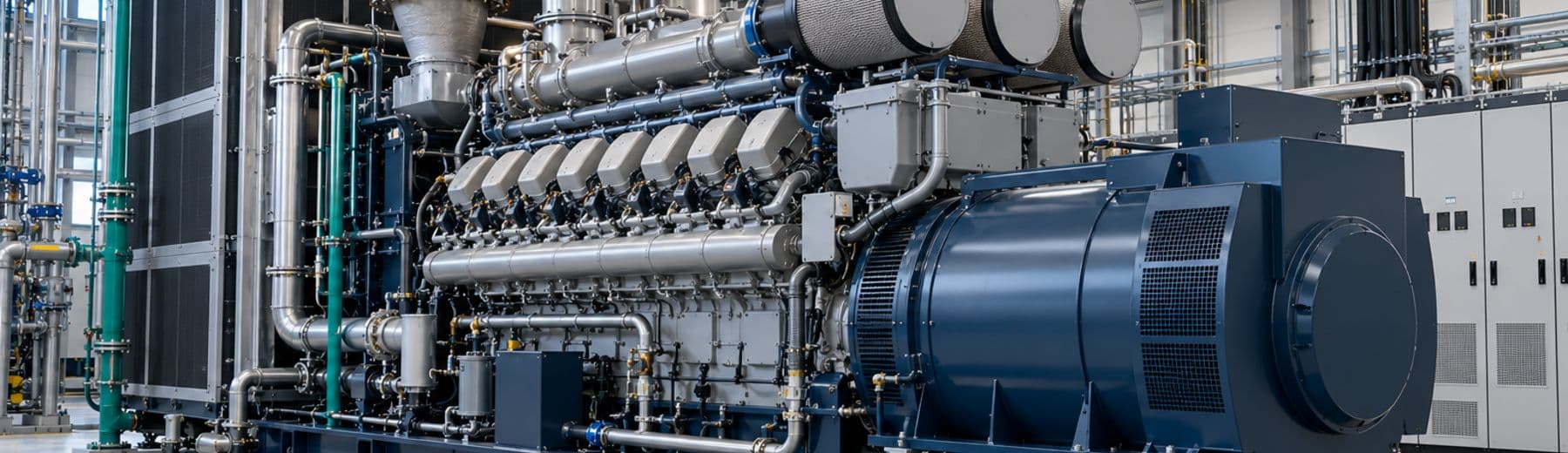
The natural-gas generator range covers approximately 63 to 1,750 kVA per unit.
These systems suit distributed prime power, combined heat and power, smaller islanded systems, and microgrids where pipeline gas is available and modular capacity is preferred — including commercial and industrial behind-the-meter generation and hybrid systems that pair solar and battery storage with firm generation.
Natural-gas engines are not a one-for-one substitute for a 16–20 MW turbine. At larger scales, unit count, maintenance, emissions controls, and balance-of-plant complexity are compared on a total installed-cost and lifecycle basis.
| Attribute | Natural-gas engine | Large gas turbine | Diesel or HVO genset |
|---|---|---|---|
| Typical Devon role | Distributed prime power | Campus-scale prime power | Emergency standby |
| Module size | 63–1,750 kVA | Approx. 16–20 MW | 1,900–6,250 kVA |
| Part-load strategy | Stage multiple engines | Operate near design load | Standby or limited-hour duty |
| Best project scale | Sub-MW to multi-MW | 50–200+ MW | Circuit-level critical loads |
| Primary fuel | Pipeline natural gas | Pipeline natural gas | Diesel or HVO |
Integrated data center architecture
A resilient data-center power system can use different technologies for different time scales. Devon coordinates the architecture so each layer has a defined operating role and no equipment is asked to perform outside its design duty.
For example, a 30 MW campus divided into ten independent 3 MW circuits could use one appropriately sized standby generator per circuit plus one common spare, subject to protection and switching design. A centralized turbine alternative would serve the main ring and require a separate redundancy strategy. BESS can bridge source transitions but does not replace properly sized firm generation.
| System layer | Operating role | Representative Devon platform |
|---|---|---|
| Continuous generation | Provides the principal on-site energy supply | GridForge 20 turbine or natural-gas engines |
| Critical standby generation | Carries designated circuits following a source failure | Modular diesel or HVO gensets |
| Fast response | Ride-through, load transition, ramp control, and power quality | GridReserve battery energy storage |
| Electrical distribution | Paralleling, protection, transformation, and circuit isolation | Project-specific switchgear and transformers |
| Supervisory controls | Dispatch, sequencing, alarms, and operating-mode management | Microgrid and plant control system |
Architecture questions answered during engineering
- Is the system standby-only, prime, continuous, grid-parallel, or fully islanded?
- Which loads require no-break power, short ride-through, or extended autonomy?
- Is redundancy N+1 at the generator, circuit, bus, or complete-system level?
- What are the largest load steps and permissible voltage and frequency excursions?
- What black-start, synchronization, and utility-reconnection sequence is required?
Markets and applications
The portfolio suits organizations that need a defined path to dependable on-site power while utility infrastructure, long-lead generation, or campus expansion is developed.
Equipment price alone does not determine the best solution. Devon evaluates installed cost, fuel infrastructure, permitting, emissions, maintenance staffing, spare parts, warranty support, construction schedule, lifecycle cost, and the financial impact of delayed energization.
| Market | Primary need | Potential configuration |
|---|---|---|
| Data centers and AI | Rapid capacity, redundancy, and load acceptance | High-capacity gensets, BESS, and centralized generation |
| Healthcare | Life-safety and critical-load continuity | N+1 standby generators with protected distribution |
| Manufacturing | Process continuity and energy-cost control | Natural-gas generation, CHP, and BESS |
| Utilities and cooperatives | Distributed capacity and resilience | Modular generation and storage |
| Municipal and education | Emergency power and community resilience | Standby generation or campus microgrid |
| Oil, gas, and mining | Remote or constrained-grid operations | Prime generation with storage and controls |
| Ports and airports | Critical operations and phased electrification | Hybrid microgrid with multiple fuel options |
From initial load to commissioning
Manufacturer identity, factory documentation, detailed specifications, performance data, availability, and commercial terms are provided to qualified parties following execution of a mutual NDA.
| Stage | Devon activity | Required project input |
|---|---|---|
| 1. Discovery | Confirm load, duty, redundancy, fuel, and schedule | Load profile, site, one-line, and operating concept |
| 2. Preliminary design | Select equipment classes and architecture | Ambient conditions, fuel data, and permitting limits |
| 3. NDA and OEM disclosure | Provide manufacturer, factory, and detailed technical documentation | Executed mutual NDA and qualified opportunity |
| 4. Budgetary proposal | Define equipment scope, options, delivery basis, and exclusions | Commercial assumptions and delivery location |
| 5. Final engineering | Complete performance guarantees and interface schedules | Engineer-of-record and EPC coordination |
| 6. Execution | FAT, logistics, installation support, SAT, and commissioning | Approved drawings, site readiness, and acceptance plan |
United States diligence
Every U.S. project is screened against these requirements before final engineering.
- EPA emissions applicability and state or local air permits.
- NFPA, NEC, UL, fire-code, and authority-having-jurisdiction requirements.
- Fuel quality, pressure, storage, hazardous-material, and spill-control requirements.
- Seismic, wind, snow, flood, temperature, elevation, and sound criteria.
- U.S. service capability, spare parts, warranty labor, and response times.
Contact
Devon Energy Solutions works with data-center developers, utilities, industrial operators, EPC contractors, independent power producers, and international project sponsors to structure scalable generation and storage solutions.
| Name | Role | Contact |
|---|---|---|
| Dr. John A. Bennett, M.D. | Chief Executive Officer | johnbennett@devonintlgroup.com |
| Rob Devereaux | Technical Sales | rob@devonintlgroup.com · +1 720 998 2786 |
All product ratings and capabilities described here are preliminary and based on currently published platform information. Exact equipment, certification, output, fuel consumption, emissions, dimensions, delivery, warranty, and commercial terms require project-specific OEM confirmation and a definitive agreement.